

Modern industry requires structural materials with high strength, fracture toughness and stiffness, while reducing weight as much as possible. In this case, light weight and high strength alloys represented by aluminum and titanium, and load-bearing heat-resistant alloys represented by Ni-based high temperature alloys, have become one of the key materials for development in the R&D programs of new materials in various countries, and are also important application materials in laser additive manufacturing.
Advantages and differences between titanium and aluminum
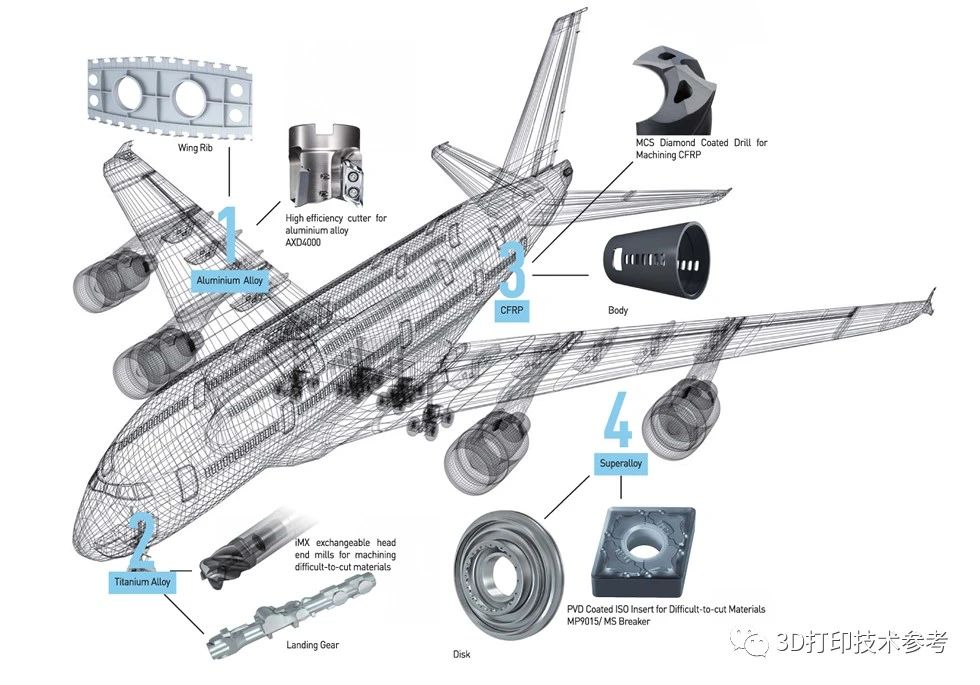
Aluminum and titanium alloys, due to their excellent low density and structural strength, whether using 3D printing or CNC machining, are used in a large number of applications in aerospace, automotive, and mechanical manufacturing, especially in the aerospace industry, where they occupy a very important position and are the main structural materials for the aviation industry.
Both titanium and aluminum are light, but there is a difference between the two. Although titanium weighs about two-thirds more than aluminum, its inherent strength means that the required strength can be achieved using much less. Titanium alloys are widely used in aircraft jet engines and all types of spacecraft, where their strength and low density reduce fuel costs. The density of aluminum alloy is only one-third that of steel, and it is the most widely used and common material for lightweighting automobiles at this stage; a study has shown that aluminum alloy can be used in the whole car up to 540kg, in which case the car will lose 40% of its weight, and the all-aluminum body of Audi, Toyota and other brand vehicles is a good example.
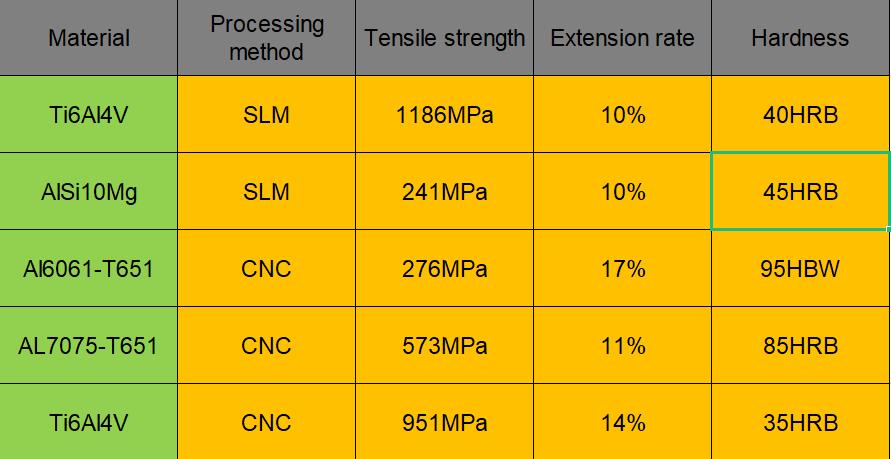
Since both materials have high strength and low density, other factors of difference must be taken into account when deciding which alloy to use.
Strength/Weight: Every gram of a part counts in critical situations, but when higher strength components are required, titanium is the best choice. Because of this, titanium is used in the manufacture of medical devices/implants, complex satellite components, fixtures and stents, and more.
Cost: Aluminum is the most cost-effective metal for machining or 3D printing; titanium is costly, but can still drive leaps in value. The fuel savings to an aircraft or spacecraft from lightweight parts will provide significant benefits, while titanium parts will last longer.
Thermal performance: Aluminum alloys have high thermal conductivity and are often used to make radiators; for high temperature applications, titanium's high melting point makes it more suitable, and aerospace engines contain a large number of titanium alloy parts.
Corrosion resistance: Both aluminum and titanium have excellent corrosion resistance.
Titanium's corrosion resistance and low reactivity make it the most biocompatible metal and is widely used in medical (e.g. surgical instruments) applications. ti64 also resists salt environments well and is often used in marine applications.
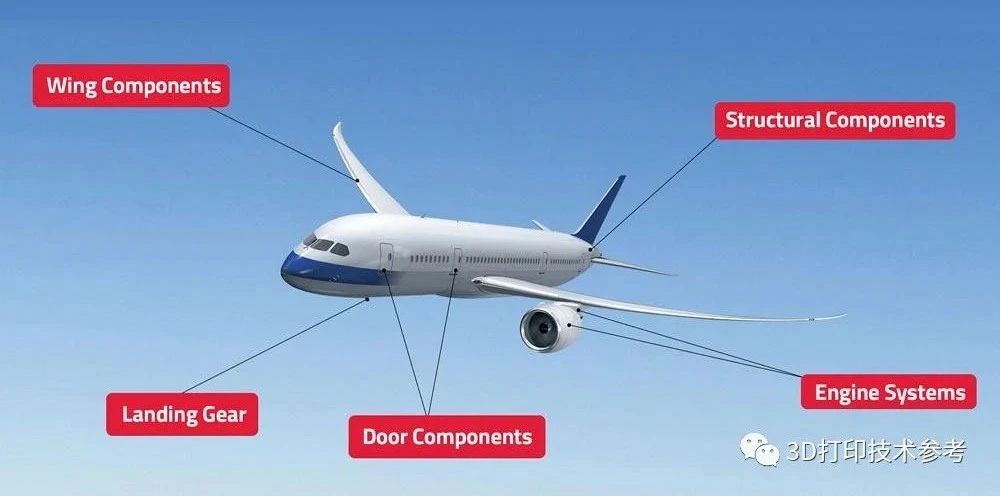
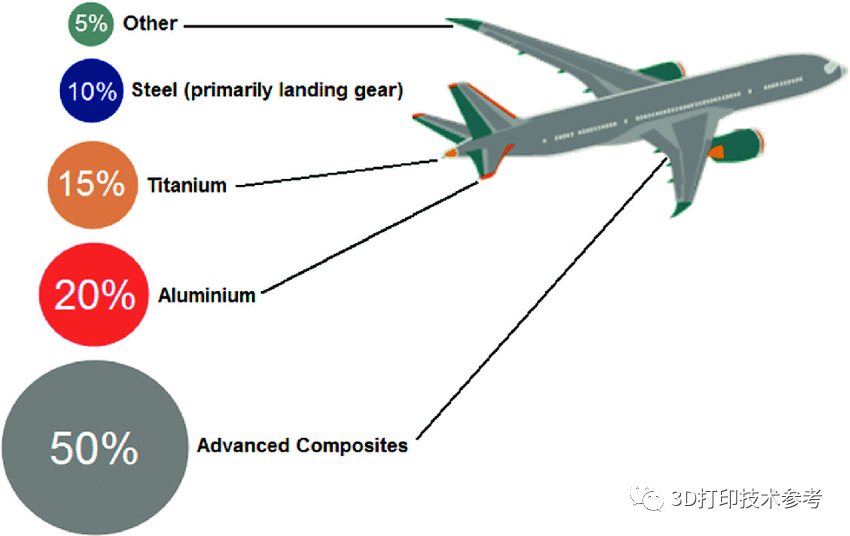
Both aluminum alloys and titanium alloys are very common in aerospace applications. Titanium alloy has high strength and low density (only about 57% of steel), and its specific strength (strength/density) is much greater than other metal structural materials, which can produce parts with high unit strength, good rigidity and light weight. Aircraft engine components, skeleton, skin, fasteners and landing gear can be used titanium alloy. 3D printing technology reference check found that aluminum alloy is suitable for working in the environment below 200 ℃, the Airbus A380 fuselage with aluminum accounted for more than 1/3, C919 also used a large number of conventional high-performance aluminum alloy materials. Aircraft skin, spacer frame, wing ribs, etc. can be made of aluminum alloy.
Titanium Additive Manufacturing and the Aerospace Industry
As the aerospace and defense industry continues to grow, so will production needs. And, when designing for aerospace and defense applications, material selection is critical. For components that leave the ground, reducing the number of components and reducing weight is critical. In these areas, every 1g reduction in weight is a significant benefit.
Titanium has an extremely high melting point of over 1600°C and is also typically a difficult material to machine, which is the main reason why it is more costly than other metals. Ti6Al4V is by far the most used titanium alloy material and is not only lightweight, but also has high strength and high temperature resistance, characteristics that make it popular in the aerospace sector. Common applications include the manufacture of engine fans and parts such as blades, disks, and magazines for the low-temperature section of a compressor working in the 400-500°C operating temperature range, as well as fuselage and space capsule components, rocket launch cases, and helicopter rotor hubs. However, despite its high resistance to heat and corrosion, titanium is a poor choice for electrical applications because of its poor electrical conductivity. Titanium is also more expensive than other lightweight metals, such as aluminum.
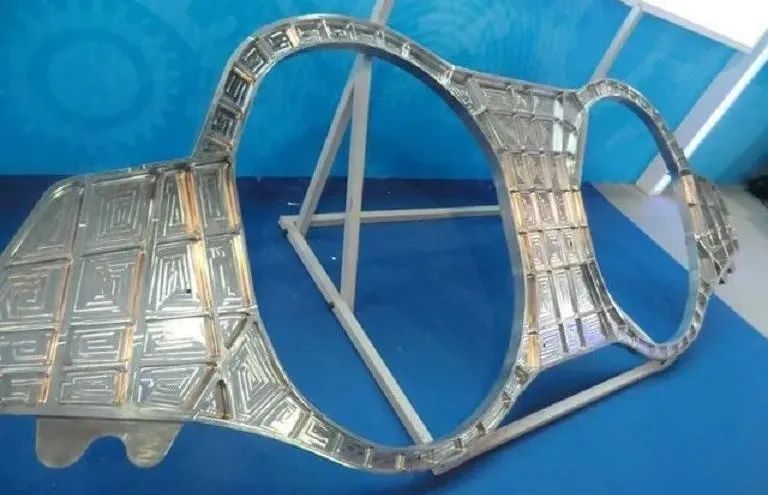
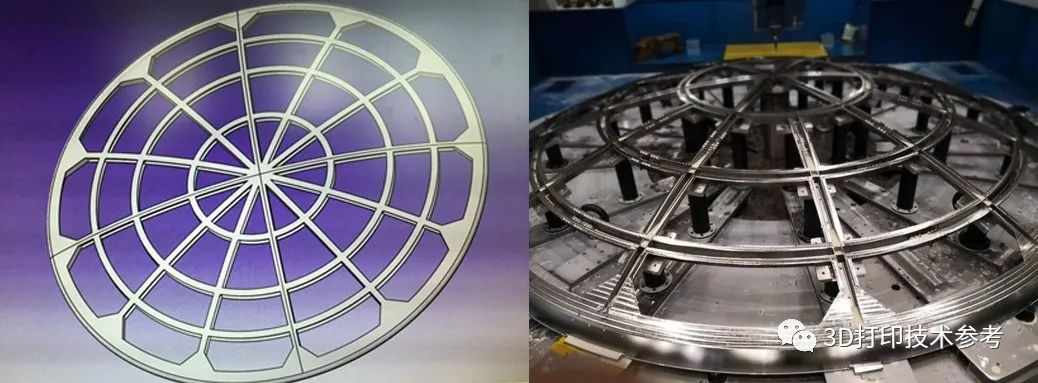
The use of additive manufacturing technology is conducive to reducing processing costs, reducing the waste of raw materials, and has significant economic advantages. Titanium-based alloys are also the most systematic and mature alloy system for additive manufacturing research. Additive manufacturing titanium alloy components have been used as load-bearing structures in the aviation field. According to the survey of 3D printing technology reference, Aero Met started to produce titanium alloy sub-load bearing structure test parts for Boeing F/A-18E/F naval joint fighter/attack aircraft in small batches in 2001, and was the first to realize the application of LMD titanium alloy sub-load bearing structure parts on F/A-18 proving aircraft in 2002. Beijing University of Aeronautics and Astronautics broke through the key technology of laser additive manufacturing of titanium alloy, the comprehensive mechanical properties of the alloy are significantly better than forgings, and the large main load-bearing titanium alloy frames and other components developed have been installed in aircraft. Northwestern Polytechnical University used laser additive manufacturing technology to manufacture a prototype of the upper and lower edge strips of the central wing ribs of the C919 aircraft for COMAC, with dimensions of 3000mm×350mm×450mm and a mass of 196kg.
Aluminum Additive Manufacturing and the Aerospace Industry
With low density, high specific strength, high corrosion resistance, good formability, and good physical and mechanical properties, aluminum-based alloys are the most widely used class of non-ferrous structural materials in industry. For laser additive manufacturing, aluminum-based materials are typically difficult to process, which is determined by their special physical properties (low density, low laser absorption rate, high thermal conductivity and easy oxidation, etc.). From the perspective of additive manufacturing forming process, the density of aluminum alloy is low, and the powder flowability is relatively poor, so the uniformity of laying on the SLM forming powder bed is poor or the continuity of powder transport in the LMD process is poor, so the precision and accuracy of the powder laying/feeding system in laser additive manufacturing equipment is required to be high.
The aluminum alloys currently used in additive manufacturing are mainly Al-Si alloys, among which AlSi10Mg and AlSi12 with good fluidity have been studied more extensively. However, due to the material nature of Al-Si alloys as cast aluminum alloys, it is difficult for the tensile strength to exceed 400 MPa, although they are prepared by optimized laser additive manufacturing process, thus limiting their use in load-bearing components with higher service performance requirements in aerospace and other fields.