

Nylon is a very strong polymer 3D printing material, and if it is compounded with carbon fiber, the superiority of both can be combined. 3D printed parts of nylon carbon fiber have excellent mechanical properties, with much higher strength and rigidity than unreinforced nylon, and significantly improved wear resistance, high temperature creep and thermal stability. In addition, carbon fiber reinforced nylon has excellent damping in 3D printing and better performance compared with glass fiber reinforced. Such high-performance materials can be used not only in the automotive field, but also in the fashion and luxury industry (Note: This article is mainly about short-cut carbon fiber composite nylon materials) .
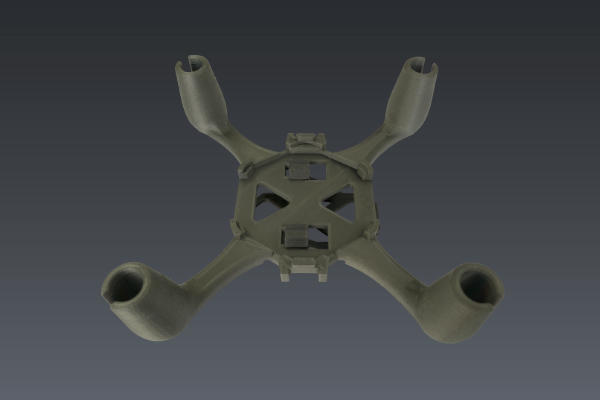
Advantages of Nylon + Carbon Fiber - Replacing metal with polymer
When designing tools for industrial applications, traditional techniques use aluminum or alternative metal alloys because the metal parts perform better and meet the requirements of the tool. In many cases, thermoplastics can meet the strength requirements of these tools, but not the rigidity required to perform the test tasks.
And this is where composites come into play. Adding reinforcing materials to the base polymer can dramatically change the performance of the raw material, making plastic parts a reality instead of metal parts. Commonly used FDM reinforcements include carbon and glass fibers, which can be used to reinforce materials such as ABS, nylon (PA), polypropylene (PP), and polyether ether ketone (PEEK).
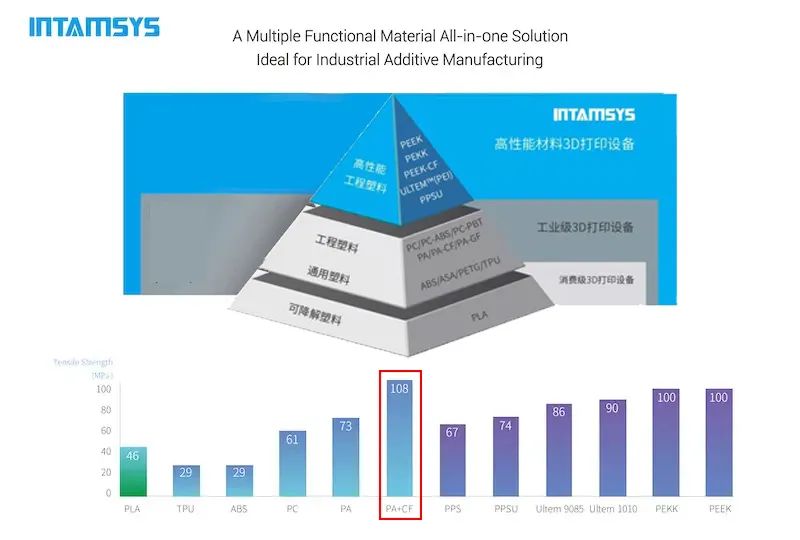
Carbon fiber reinforced nylon is an ideal alternative to metal. Due to the combination of the light weight of nylon and the mechanical strength and thermal properties of carbon fiber, the strength and stiffness of carbon fiber composite nylon material is significantly increased, and its mechanical strength even exceeds that of 3D printed PEEK and PEKK, which can replace metal parts in the automotive industry from interior and exterior components such as vehicle mounts and instruments to engine cases. It is well known that automotive carbon fiber is widely used in automotive manufacturing due to its strong thermal and mechanical properties. As an alternative to metal parts, carbon fiber reinforced nylon has wide application prospects in the automotive industry, enabling the possibility of weight reduction and design optimization, as well as environmental and economic advantages.
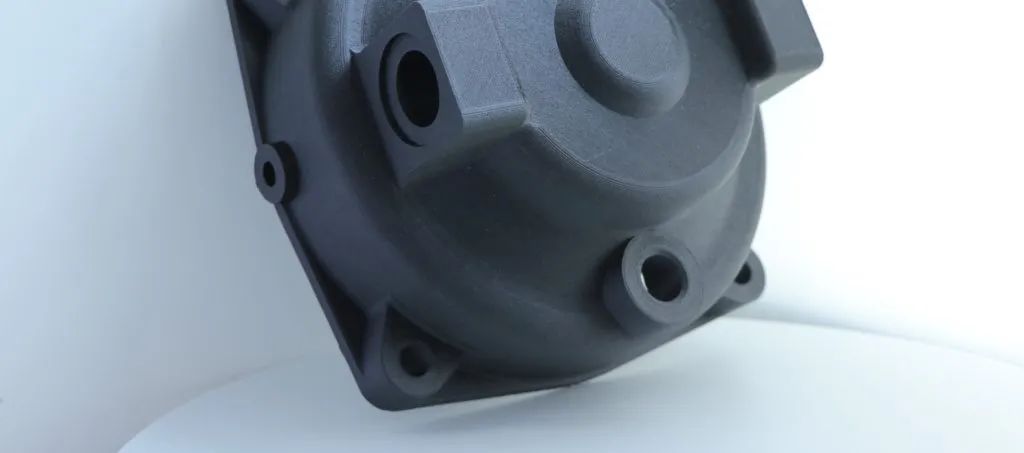
Manufacturing is constantly adapting to meet new demands. The need for customization, on-demand production and small batch sizes are all continuing to give rise to alternative solutions that differ from traditional manufacturing methods. Additive manufacturing technologies may never fully replace CNC machine tooling or casting, but high-performance FDM printers can meet these needs in a cost-effective manner.
Carbon fiber filled nylon has higher performance than pure nylon and is one of the strongest thermoplastic materials in the FDM portfolio, which can be used not only in automotive manufacturing, but also in other industries for its special properties.
Carbon fiber reinforced nylon solves manufacturing challenges in the luxury industry
Federica Tiso, materials development scientist at Promotion SpA, a company with a very high profile in the luxury jewelry as well as watch industry, says they control the entire process, from prototyping, prototype testing, manufacturing, quality control to logistics, to provide a complete solution for their customers.
The company has been using 3D printing technology extensively for years to reduce development time and ensure the quality of each bracelet. 2014 saw the introduction of the first metal 3D printer based on SLM technology with bronze and stainless steel for prototypes and tools, followed by the purchase of a metal 3D printer that can print pure gold.
During the watch design validation process, a series of prototyping issues were solved with a carbon fiber reinforced nylon fixture manufactured by 3D printing. This company was impressed by the mechanical strength and lightweight characteristics of the nylon carbon fiber.
The process of joining watch chains requires surface welding, a process that cannot be done without a jig, and the use of traditional 3D printed resin jigs poses some problems. A soft material was needed to protect the watch chains from damage to the fixture itself and to prevent them from moving during the process. The overall size of the fixture is 115x16.75x10mm and the tooth width is about 0.8mm. When using the 3D printed resin fixture, Promote SpA found that the fixture was weak due to the effects of photodegradation and that the resin fixture was prone to break when too much force was applied.
romotion SpA had to look for other solutions and eventually, at the suggestion of its engineers, used carbon fiber-reinforced nylon for the fixture. federica Tiso says, "we had never used such a material before, but we were impressed by its high strength to quality ratio. the 3D-printed nylon carbon fiber fixture requires a fixed side nut, but it has the strength and precision to meet the requirements of use, and it doesn't warp midway, even when the fixture is already overloaded."
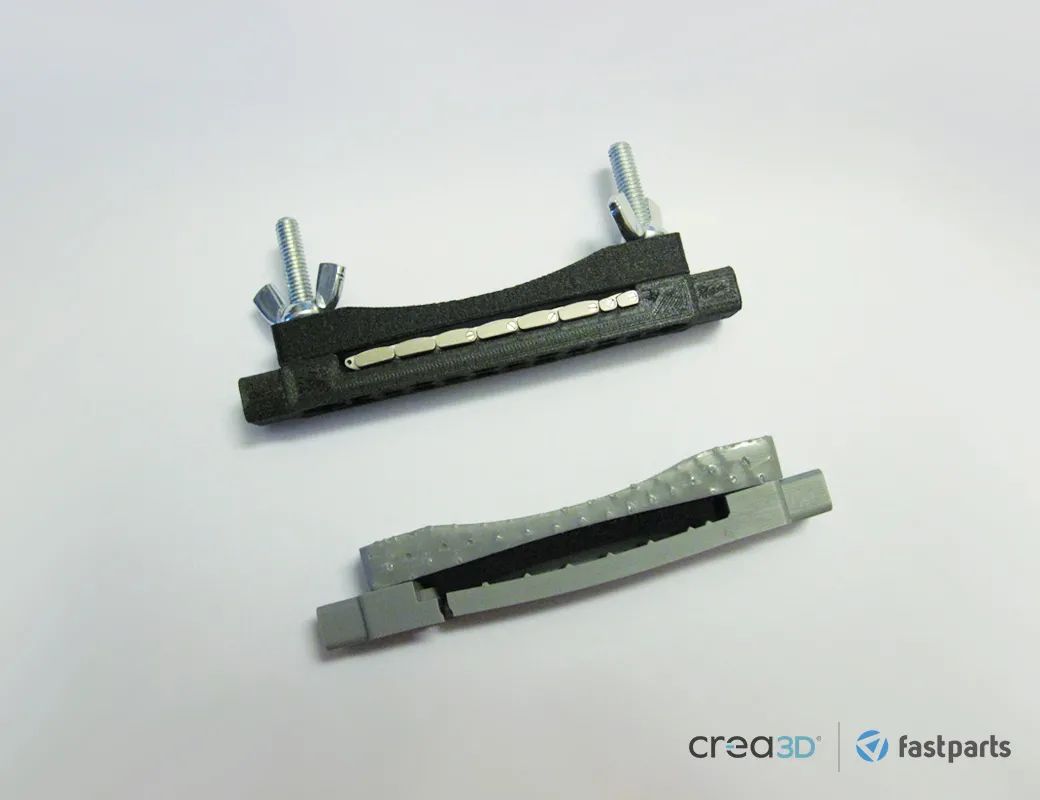
By actually proving that clamps printed with high-performance materials can replace metal in particular, they are continuing to explore applications, including the use of nylon carbon fiber materials to create lightweight and wear-resistant robotic end clamps. And as we mentioned earlier that the company purchased multiple types of 3D printers, we can see from this case that different processes and materials, applicable to different manufacturing segments, are difficult to replace each other.