

Automotive manufacturing is an important application area for metal 3D printing technology, from rapid prototyping to speed up the development of new vehicles, to direct production of small quantities of parts to shorten the supply chain and save costs. In addition, 3D printing's unique advantages in manufacturing complex parts can simplify the number of automotive parts, reduce weight, and save material. It can be said that 3D printing technology has a lot of advantages for automotive manufacturing. Nevertheless, the technology has not been widely used in this field until now. That's because having the ability to make more complex parts faster and cheaper - is the way the future of automotive manufacturing will be.
Additive manufacturing in today's automotive industry
In the automotive sector, the first adopters of additive manufacturing technology were not the car manufacturers themselves, but the teams they sponsored. For decades, many companies, from Ford to Ferrari, have used racing cars as incubators to test new technologies. Many of the standard features of new cars today - regenerative braking systems for hybrids, push-button ignition systems and even rearview mirrors - can be traced back to their roots. The same applies to 3D printing, especially metal printing. Formula 1 teams, World Endurance Challenge teams, Formula E teams and many more have experienced firsthand the benefits of additive manufacturing - rapid iterations of design, rapid prototyping and lightweighting of components - all of which can improve a vehicle's on-track performance.
With all the manufacturing benefits of 3D printing, why haven't automakers widely adopted it?
In essence, it comes down to three factors - cost, materials and speed.
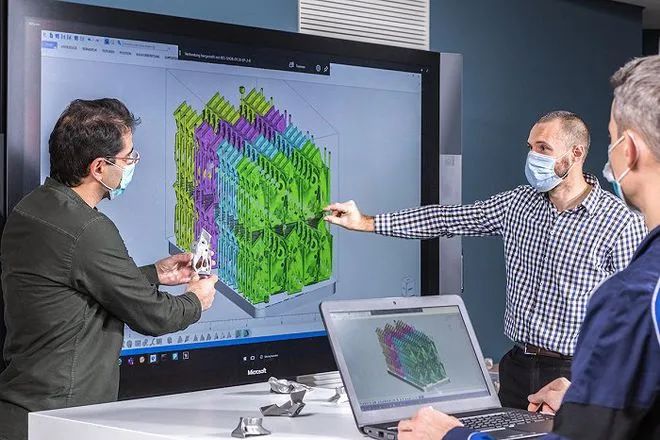
3D printing technology is also currently limited in the types of materials it is compatible with. In the case of plastics, for example, most materials that can be molded today meet only limited needs, and for more demanding applications for automakers, existing materials do not even pass laboratory tests.
The cost of raw materials based on this technology is very high. Even though it has undergone significant price reductions, metal powders still cost hundreds or even thousands of dollars per kilogram, and finished parts can cost hundreds to thousands of dollars per kilogram - too costly for mass production.
In terms of speed, even the best machines can't compete with mass production. The fastest powder bed melting equipment can only produce 100 cubic centimeters per hour.
While 3D printing has been successful in the automotive sector, especially as motorsports can afford to pay high costs to print complex parts in order to achieve victory, only a more cost-effective approach will allow it to expand into a wider range of manufacturing processes. Current challenges from cost, materials and speed have led to limited adoption of the technology in the automotive manufacturing industry, and most parts are still being produced using traditional methods such as casting, forging, machining and stamping.
Laser powder bed melting is more suitable for small volume, high value applications
The most widely used 3D printing system to date, laser powder bed melting technology, uses a laser to melt thin metal powder layer by layer until the part is manufactured. The technology is capable of preparing metal parts quickly and accurately, and has gained widespread use in automotive manufacturing over the previous decade. Companies such as BMW, Ford, Volkswagen and Mercedes-Benz have all established typical cases in the use of this technology and have achieved volume manufacturing under certain conditions, but the parts involved in these cases are still mostly limited to high-end brands and the total volume is still limited.
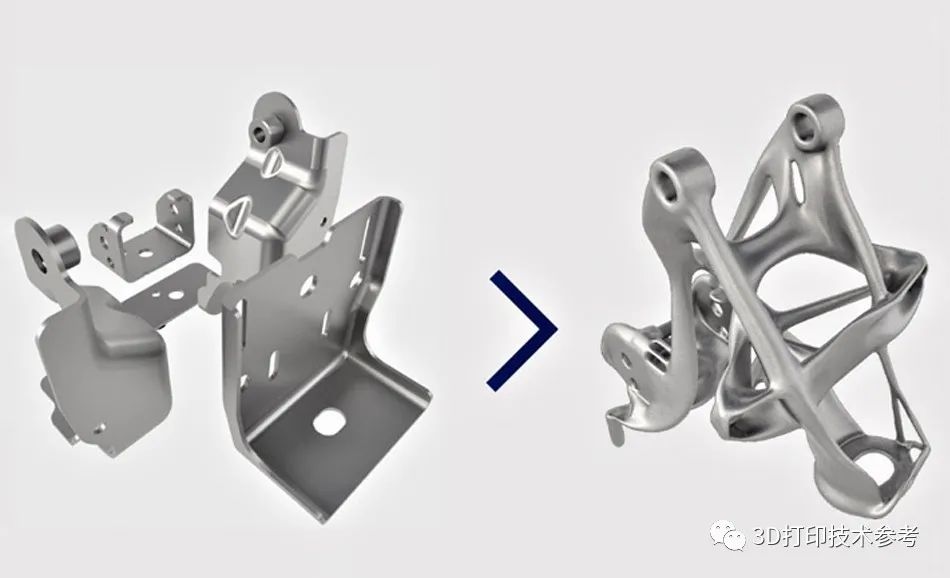
To date, a range of high-value applications in the automotive sector have resulted from the significant manufacturing benefits of laser powder bed fusion technology - integration, high precision and complex manufacturing characteristics. Examples include GM's use of generative design and 3D printing to integrate eight components of a car's traditional seat bracket into a single assembly, Bugatti's use of 3D printing technology to create the new Calon calipers, Porsche's use of a series of innovative designs to 3D print prototype aluminum engine housings, BMW's mass-printed soft-top bracket for the i8 Roadster, and more. These cases, whether for prototyping or end use, are all inseparable from the unique manufacturing characteristics of laser powder bed melting technology. But again, one characteristic is that these applications are very limited, almost all of them belong to high-end brands, and very few of them can meet the requirements for low-cost, high-volume manufacturing in this field.
Extrusion-based Desktop Metal 3D Printing for Prototyping
Extrusion-based desktop metal 3D printers feature an office-friendly design that excludes the risk of dust and laser exposure, making them an easier-to-use end-to-end solution.
The technology can print a wide range of materials, including H13 tool steel, 4140 chrome steel, 316L and 17-4 PH stainless steel, making it ideal for automotive component development, tooling and parts manufacturing, etc.
Binder jet metal 3D printing better suited for high-volume part manufacturing
The most prominent feature of the binder jetting process is that it allows for batch manufacturing of metal 3D printing. The equipment based on this process is less expensive than traditional laser 3D printers, the printing speed is tens or even hundreds of times faster than four laser powder bed melting equipment, and the material used is traditional MIM powder, which is more affordable than spherical powder, and the manufacturing cost of parts is therefore tens of times lower than laser 3D printed parts. As a result, the binder injection process exceeds metal 3D printing in terms of equipment cost, powder cost, and printing efficiency, and even though its part performance is slightly lower, it still has the same level of performance as injection molded parts. Therefore, this technology is more suitable for achieving high volume part manufacturing.
Advances in 3D printing technology have created new opportunities at every stage of the automotive manufacturing lifecycle - from functional prototypes to mid-volume production to aftermarket and spare parts. And most of these opportunities are related to production speed and part complexity, or both. Because it is not constrained by traditional manufacturing, 3D printing allows designers and engineers to enter a vast new design space and create increasingly complex parts.
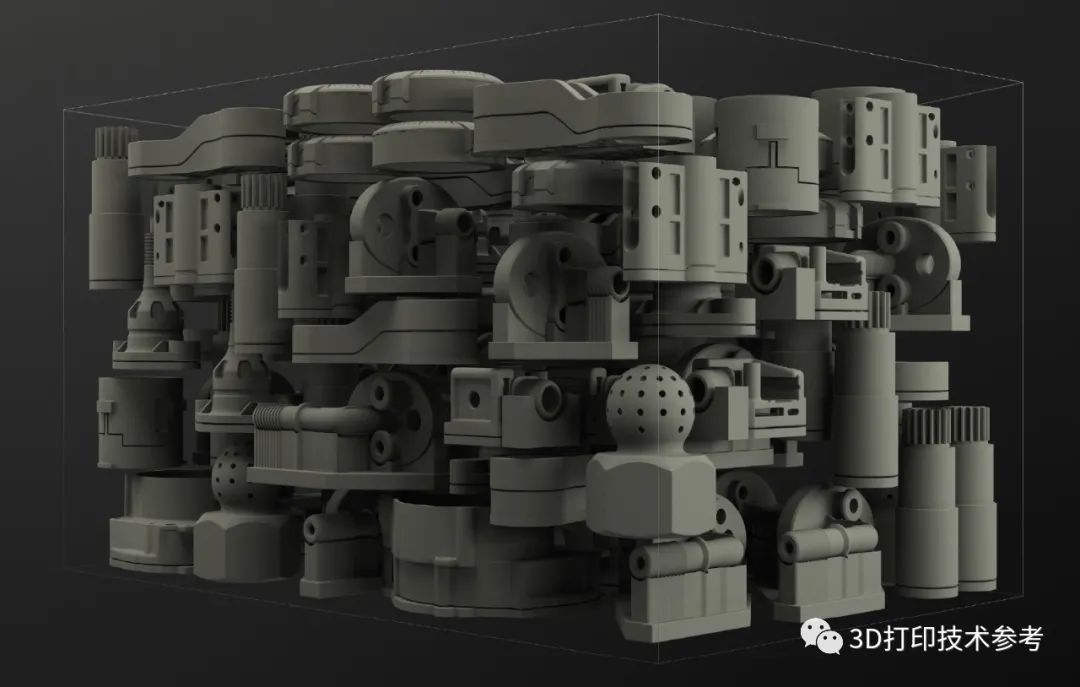
When optimized parts are faced with mass production, materials, molding efficiency, and price become limiting factors that prevent the advantages of 3D printing technology from being widely used. The development of new technologies, on the other hand, breaks down this barrier, allowing optimized structures to be realized on a large scale and in an efficient and more economical form.