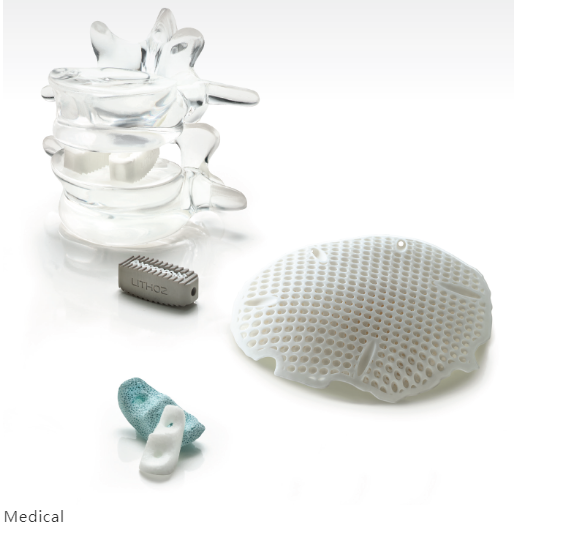
Currently, metal 3D printing, polymer 3D printing, ceramic 3D printing, and biological 3D printing technologies have been developed worldwide. According to the difficulty and depth, the use of 3D printing technology in medical treatment can be divided into four levels: preoperative planning and advance rehearsal, surgical guide and rehabilitation scaffold, orthopedic matching and human implantation, and living organ printing. At present, living organ printing is in preliminary exploration worldwide, and the first three have been applied in China to varying degrees. It is reported that several hospitals in the country have cases of 3D printing technology application. Such as the Third Hospital of Peking University, Beijing Jishuitan Hospital, the Ninth People's Hospital of Shanghai Jiaotong University School of Medicine, the First Hospital of Zhejiang University, the First People's Hospital of Jining City, Shandong Province, Guangdong Provincial People's Hospital, the Third Affiliated Hospital of Southern Medical University, etc.
At the same time, 3D printing can not only "tailor-made" to provide all kinds of bones, organs and tissues, but also to achieve precise and personalized drug screening. Currently, domestic research teams have already combined adipose stem cells, endothelial and pancreatic islet cells in 3D space to form a model that simulates the metabolic regulatory structure in vivo, whether it is insulin secretion, glucose metabolism, fat metabolism, or the secretion of blocking factors, the relevant results are closer to the human body, and the sensitivity and toxicity of the drug response is more accurate.
In addition, the industry's greatest expectation of 3D printing is personalized custom organs. Currently, in addition to prosthetics, dentures, skeletal scaffolds and other products without life characteristics, scientists have begun to work on human cellular tissues and organs with activity. 3D printing can provide new research tools for regenerative medicine, tissue engineering, stem cells and cancer, among other research fields.
Where is the future of medical 3D printing?
3D printing has a promising application in the medical field. The rapidity and accuracy of bio-3D printing technology and its expertise in making complex entities make it a very promising application in the medical field. Together with the combination with 3D modeling technology, it will have a huge driving effect in the manufacturing of artificial prosthesis and artificial tissues and organs.
Furthermore, medical 3D printing is the most important testing ground in the field of 3D printing, which is related to the survival of the industry. Compared to the current traditional manufacturing technology, 3D printing currently has the advantage of personalization, but there is no advantage in production cost. However, there are two other fields in this world where cost is not a consideration and cost effectiveness, one is medicine and the other is military. The medical field has a very high demand for personalization and is also a field where cost effectiveness is not a consideration. There is a consensus in the 3D printing community that the first big industrial field where 3D printing can be promoted on a large scale is the medical field.
Medical 3D printing in the future how exactly we as broken? Additive manufacturing, 3D printing and powder metallurgy industry wind vane "Formnext + PM South China", will be September 14-16, 2022 Shenzhen International Convention and Exhibition Center (Baoan New Hall) with you to discuss!
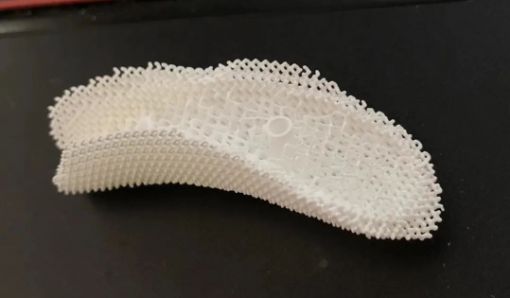
Cephalic implants
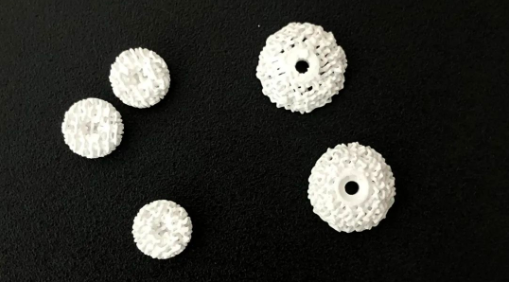
Bioceramic artificial bone
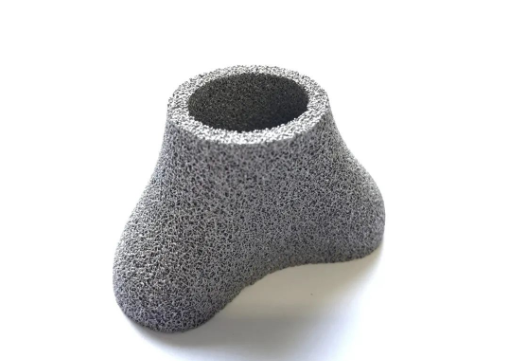
Joint Revision Pads