

3D printing technology has been used in the production of civil aircraft spare parts for many years, but the vast majority of them are made of plastic, metal parts and even load-bearing parts are strictly regulated. Recently, 3D Printing Technology Reference learned that the European Aviation Safety Agency approved the first 3D printed load-bearing metal part for use on an aircraft - "A-Link" for the anti-icing system of the IAE-V2500 engine, which powers the Airbus A320.
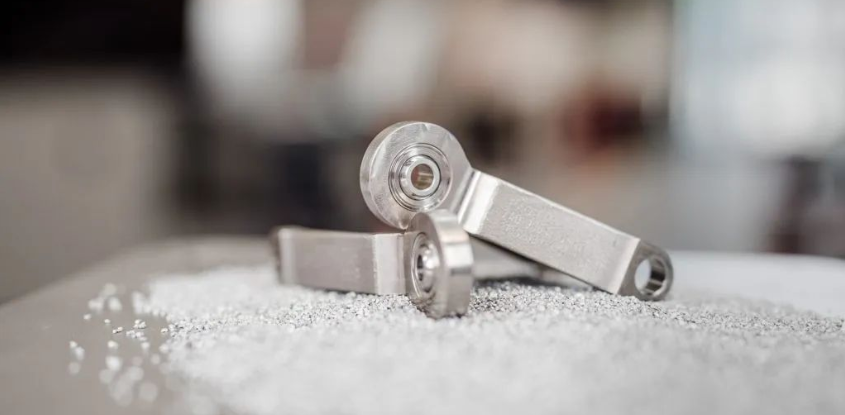
Developed by 3D printing service provider Lufthansa Technik and Airbus subsidiary Premium AEROTEC, the A-Link (A-shaped connecting rod) serves to secure a ring-shaped hot air duct to the engine intake cowl, which prevents icing during flight operations, for a total of nine A-Link parts on a single engine. However, the vibrations that occur during engine operation cause the A-Link to wear at its mounting holes, so spare parts need to be replaced every few years.
Because the A-Link needs to be exposed to temperatures of up to 300 degrees Celsius, it is made of titanium alloy. Initially, the assembly was manufactured through a forging process to meet the highest requirements for material performance. However, the new manufacturing solution developed by the manufacturing team was fabricated layer by layer through laser powder bed fused metal 3D printing, eliminating the need for jigs or molds during production. In addition, the process saves material, requiring only a very small degree of material removal on certain functional surfaces after 3D printing.
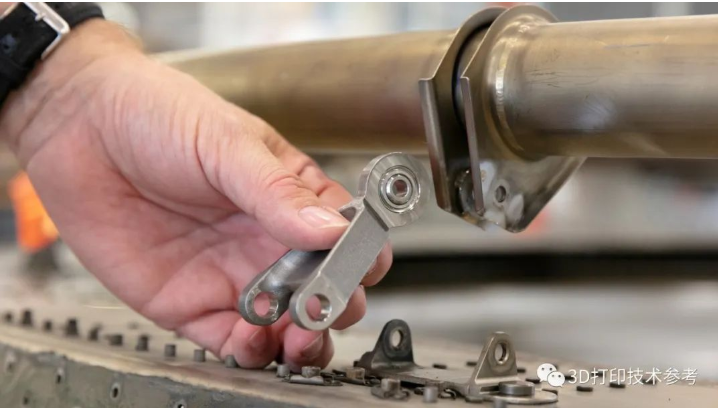
In metal additive manufacturing, the mechanical properties of the part are heavily influenced by the printing parameters, making process certification a complex but critical process. In order to validate the 3D printing process for A-shaped connecting rods, Premium AEROTEC performed "bulk" printing tests using prototype samples to fine-tune the reliability and repeatability of the build. In additive manufacturing, dimensional differences between identical parts are always a problem, but the European Aviation Safety Agency considers the A-Link safe in this regard. One of the objectives of the testing was to match the performance of the forging process, and the parts printed by Premium AEROTEC ultimately proved to have better tensile strength than their conventionally manufactured counterparts.
As part of the certification process, Lufthansa Technik expanded its capabilities to provide services to the European Aviation Safety Agency, including metal 3D printing. premium AEROTEC is offering a series of 3D printed components to customers outside the Airbus Group for the first time - the first A-shaped connecting rod parts will be used in the Lufthansa fleet.
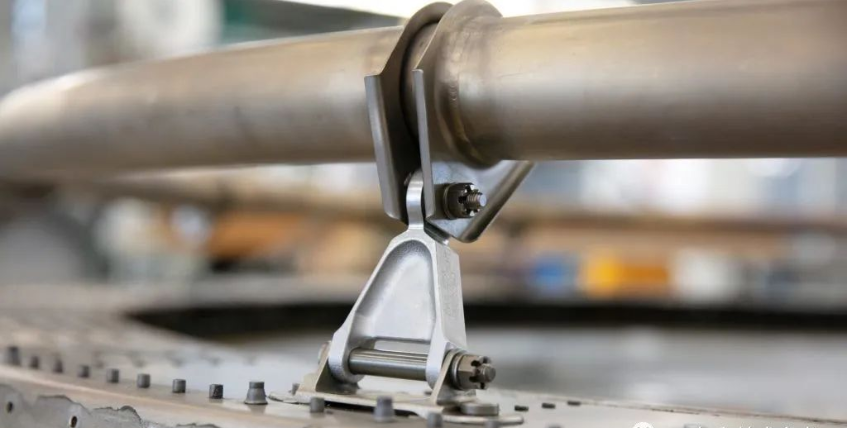
Lufthansa Technik's chief operating officer said that they have been using 3D printing for many years to produce parts for aircraft nacelles, the vast majority of which are made of plastic. Using metal 3D printed parts as flight load-bearing components is a first, and in this way, not only does it save on the cost of the components involved, but it also defines and validates all the processes necessary to apply this groundbreaking manufacturing method to structurally related metal parts.
Because the geometry of the A-shaped connecting rod part remains essentially the same as the original part, the first aerospace certification of the load-bearing metal spare part now represents only the first step in a collaboration that will be followed by targeted geometry optimization using the advantages of additive manufacturing. In theory, there are no limitations to the forming of additive manufacturing components, so they can be produced more easily, using less material, while maintaining the same strength and functionality. Both parties intend to further develop these possibilities in the near future.